
Arlington, Texas · Designed, Built, Maintained
Garden Design & Edible Gardens in Arlington, TX
Raised beds, herb gardens, and ornamental plantings — designed for a North Texas growing calendar and maintained for you if you’d rather eat the vegetables than manage them.
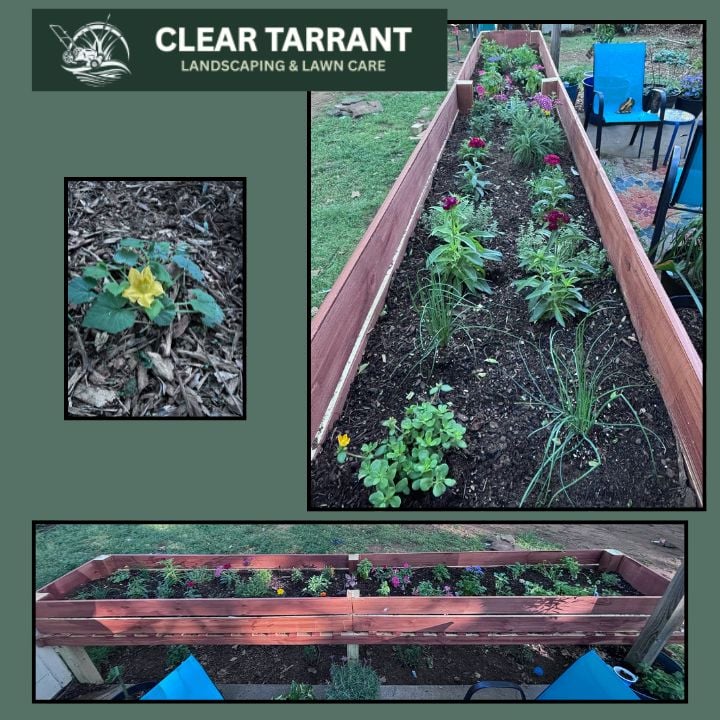
Cedar raised bed · Arlington, TX
Native Plant Society of Texas Certified
Fully Insured
Free Estimates
Clear Tarrant designs, builds, and maintains gardens in Arlington, Texas and the surrounding Tarrant County communities. Work includes cedar raised beds, vegetable and herb gardens, pollinator and cutting gardens, and ornamental bed design. Plantings are scheduled around the North Texas growing calendar, which supports two distinct vegetable seasons — spring and fall — separated by a summer too hot for most crops to produce. Ongoing maintenance is available for customers who want the garden without the upkeep. Estimates are free.
What We Build
From one herb bed to a full kitchen garden
Cedar Raised Beds
Built on site and sized to your space. Cedar because it handles Texas weather without treatment chemicals leaching into soil you’re growing food in. Sited for sun and reachable from both sides.
Vegetable Gardens
Planted to the season that’s actually coming, not whatever the garden center is selling. Spring crops in spring, fall crops in fall, and an honest conversation about July.
Herb Gardens
The highest-return thing you can plant. Rosemary, thyme, oregano, and sage are effectively permanent here, and a bed near the kitchen door gets used constantly.
Ornamental Bed Design
Not everything has to be edible. Layered beds with structure, seasonal color, and plants chosen to hold up through an Arlington August rather than a Pinterest photo.
Pollinator & Cutting Gardens
Native-forward plantings that feed bees and monarchs, and give you something worth cutting for the kitchen table. These two goals overlap almost entirely.
Ongoing Maintenance
Optional, and the reason a lot of these gardens are still producing in year three. We plant, weed, feed, and swap the beds over between seasons. You harvest.
North Texas Specific
You get two gardens a year here, and most people only plant one
The standard North Texas gardening story goes like this. You plant tomatoes in April. It looks fantastic in May. By mid-July the plants are alive but producing nothing, everything looks exhausted, and by August you’ve stopped watering. Next spring you decide you don’t have a green thumb.
Nothing went wrong. That’s just what summer does here — most vegetables stop setting fruit once night temperatures stay high, and no amount of care changes it. The mistake isn’t the gardening. It’s treating a two-season climate like a one-season one.
Spring
Transplants go in after the last frost, typically around mid-March. Tomatoes, peppers, squash, cucumbers, beans.
The trick is planting early enough that tomatoes set fruit before the heat shuts them down. Two weeks late in April costs you most of the harvest.
Summer
Okra, southern peas, and sweet potatoes genuinely enjoy it. Almost nothing else does.
This is a holding period, not a failure. Keep things alive, keep them mulched, and start seeds for fall in the shade while you wait it out.
Fall — the better one
Greens, kale, chard, lettuce, spinach, broccoli, cabbage, carrots, beets, radishes, and garlic to overwinter.
Cooler nights, fewer pests, less watering, and a first frost that usually holds off until mid-to-late November. Ask anyone who gardens seriously here — fall is the good season.
This is why we time installs the way we do. If you call us in June wanting a vegetable garden, we’ll often recommend building the beds now and planting in September — because a fall garden you’ll actually enjoy beats a summer one you’ll abandon.
Why Raised Beds Here
You are not going to win an argument with Arlington clay
You can amend heavy clay for years and slowly improve it. Or you can build a box, fill it with soil you chose, and start growing this season. For vegetables, the box wins nearly every time.
Drainage. Clay holds water. Vegetable roots sitting in saturated soil rot, and after a wet North Texas spring that’s a real risk. A raised bed drains.
You control the soil. Instead of fighting what’s there, you fill with a blend built for growing food — and it stays good, because nobody is walking on it and compacting it.
Warms earlier. Raised soil comes up to temperature faster in spring, which matters a lot when your tomato window is as tight as ours.
Easier on your back. Underrated. A bed you can work standing up, or from a seat on the edge, is a bed that keeps getting tended in year two.
Defined edges. Bermuda grass will invade an in-ground vegetable patch relentlessly. A bed with a proper border is far less work to keep clean.
The Part Most Companies Don’t Offer
We’ll keep it going if you’d rather just do the harvesting
Plenty of companies will build you a raised bed. Very few will still be involved the following March, which is roughly when most home vegetable gardens quietly become storage for empty pots.
The gardens that survive aren’t the ones with the most enthusiastic owners. They’re the ones where somebody handles the unglamorous parts on schedule: pulling weeds before they seed, feeding the soil between plantings, catching pests early, and swapping the beds over from spring crops to fall crops at the right moment in September.
We do that as an ongoing service. Weeding, feeding, seasonal replanting, and keeping the irrigation right. You walk out with a basket.
It’s optional, and plenty of our customers want to do the growing themselves — in which case we’ll build the beds, plant the first round, and tell you honestly what to expect from each crop. Both are fine. What we’d rather avoid is building something beautiful that’s abandoned by August.
★★★★★ 5.0 on Google
What Arlington homeowners say
Sean was amazing from the very beginning of my project. His communication and how polite he was is the reason I had him come to my house. He will be my go-to for all my landscaping projects. My backyard looked great when he was finished.
— Lynda G.
Sean was amazing to work with and communication throughout was excellent. He enjoys what he does and takes pride in his work down to the smallest detail. The finished product surpassed my expectation.
— Michelle F.
Clear Tarrant is our go-to for landscaping services, whether we need our lawn mowed or a project done that we do not have time to complete. Sean listened, made suggestions and in the end we were very happy with the end result.
— Jerry W.
Questions We Get
Garden design FAQs
When should I plant a vegetable garden in North Texas?
There are two seasons. Spring transplants go in after the last frost, typically around mid-March, for tomatoes, peppers, squash, cucumbers, and beans. Fall planting runs from about September for greens, kale, chard, lettuce, broccoli, cabbage, carrots, beets, and garlic. July and August are effectively a gap — okra, southern peas, and sweet potatoes handle the heat, but most crops stop producing. Fall is generally the more productive and more enjoyable of the two seasons here.
Why did my tomatoes stop producing in July?
Nothing went wrong. Most tomato varieties stop setting fruit once night temperatures stay high, which happens reliably in a North Texas summer. The plants stay alive but simply don’t set. The fix is timing rather than technique — get transplants in early enough that they fruit before the heat arrives, and plan on a fall crop rather than expecting production straight through.
Do I need raised beds, or can I plant in the ground?
You can grow in the ground, but Arlington’s heavy clay makes it considerably harder. Raised beds solve drainage, let you choose the soil rather than amend clay for years, warm earlier in spring when the tomato window is tight, keep Bermuda grass from invading, and are far easier on your back. For vegetables specifically, raised beds are usually the better answer here.
What herbs grow well in Arlington, TX?
Rosemary, thyme, oregano, and sage are essentially permanent here — they handle the heat, want little water once established, and come back year after year. Chives and mint do well, though mint should be contained or it will take a bed over. Basil thrives in summer heat but won’t survive a frost, so it gets replanted each spring.
Do you maintain the garden after building it?
Yes, and it’s optional. Ongoing maintenance covers weeding, feeding, pest monitoring, seasonal replanting between spring and fall crops, and keeping the irrigation right. It’s the difference between a garden that’s producing in year three and one that became a place to store empty pots. Plenty of customers prefer to garden themselves, which is completely fine — we’ll build it, plant the first round, and tell you what to expect.
How much sun does a vegetable garden need?
Most vegetables want six to eight hours of direct sun, and fruiting crops like tomatoes and peppers are the most demanding. Leafy greens and many herbs manage with less. In an Arlington yard with mature trees, siting is often the single biggest factor in whether a garden succeeds, so we walk the property and watch where the light actually falls before deciding where a bed goes.
What do raised beds cost?
It depends on size, number of beds, material, the soil blend to fill them, and whether irrigation is included. A single herb bed near the kitchen door is a modest project; a full kitchen garden with multiple beds and drip irrigation is a larger one. We’ll walk the space and give you a free written estimate.
Can you build a pollinator or butterfly garden?
Yes, and it pairs naturally with our native plant work. North Texas sits on the monarch migration route, and native-forward plantings feed both monarchs and native bees. A pollinator garden and a cutting garden are largely the same plant list, so you can have both from one bed.
What areas do you serve?
Clear Tarrant is based in Arlington, Texas, and serves Tarrant County — including Mansfield, Kennedale, Grand Prairie, Pantego, Dalworthington Gardens, and southeast Fort Worth. If you’re not sure whether you’re in range, call and we’ll tell you straight.
Often Paired With Gardens
Other services
Free Estimate
Let’s find the sunny spot in your yard
Call or text Sean. We’ll walk the property, work out where a bed actually belongs, and time the planting to the season that’s coming.
Fully insured · Free estimates · Serving Arlington & Tarrant County